Wednesday, January 31, 2007

book excerpt numero uno

By now most people familiar with the concept of resource depletion, and more specifically peak oil, have heard the process of learning about energy descent described as a sort of grieving progression. You know, first there's denial and then anger and then bargaining, followed by depression and ultimately acceptance. Personally I find it a rather useful way to gage position when talking to other people about these tough issues. After only a few minutes it’s often possible to see where someone is in his or her own personal journey through the valley of reality. “Ah,” I’ve said to myself, “that woman is stuck solidly in the stage of anger.”

In looking back on my own journey of coming to terms with a future that appears destine to be very different from all that was promised to me as a child, I am amazed at what has emerged as important as I’ve entered acceptance. Who would have thought that I would be so concerned with food? I mean I like food. I’ve eaten it my whole life. But growing lots more of it? And helping others to see food and food production as a pivotal issue in beginning to address peak oil, climate change, wide spread social injustice and the other issues brought on by run away empire? Not exactly how I thought I’d be spending my intellectual hours during midlife. Then again there is the fact that I’ve been digging apples seeds out of my lunch fruit since the days during which I carried it to school in a metal box. Come to think of it, I’ve been accused of living with, what many of my roommates (and my wife) have considered, “Way to many damn houseplants Aaron!” When a friend from university visited me recently, she walked by a table full of rooted cuttings only to exclaim, “Yup, that figures.” Yeah, I guess I have always been fascinated by plants, especially trees, who are able to grow from tiny seeds into enormous creatures without ever moving from the exact same spot where they first take root. Ok so my current fascination with growing plants, growing food and feeding ourselves isn’t so much of a stretch. In fact it’s something I’ve been interested in for so long it now seems common place as a central idea in my life. But agri/hort/perma-culture as a response to peak oil? In truth it’s been a wonderful way to focus my energy after having been released into this new place, a new world in which things are not as they appear, in which the future isn’t scripted and some of the most dreadful aspects of modern society seem set to collapse under the weight of complexity with a little help from a man named M. King Hubbert.

But before I go excessively romanticizing the upcoming great commotion, let me stop and say that there appear to be problems that will accompany this change in our relationship with energy, the environment and each other. All indications point to some serious, forthcoming problems. How we grow food and all the ripples we send out into our pond by doing so is one of them. We who have received advance notification are in charge of addressing them; or at least looking into the calamities before they become catastrophes and offering up possible solutions. What an awesome responsibility and maybe more than I was originally bargaining for in the wake of my own understanding of peak oil. None the less, here I am making my own change and helping others to make theirs.

At this moment my most pressing project is the book I am coauthoring with Sharon Astyk. She and I have decided to preview some of it on each of our own personal places on the dang ole internet; partially as a way to share news of our project with others, partially as a way to gather input & interest and partially just for fun. Her first excerpt is right here.

All snippets shared are in the process of being, “whipped into shape” for publication under a yet to be determined title. The general goal though is to shine a light at the dependence of industrial agriculture on fossil fuels while exploring the current disconnect between people and their food; not to mention the much needed renaissance in slow food cooking with whole food ingredients from the garden; all with an eye towards many more farmers as a way to address the above mentioned calamities. All indications are that changes in the 21st century could, should and just might mean that we will all get much more personal with the way we get our eats. It’s bound to be interesting.

What follows is the start of a discussion for the book on arable land, where can we expect to grow food and why.


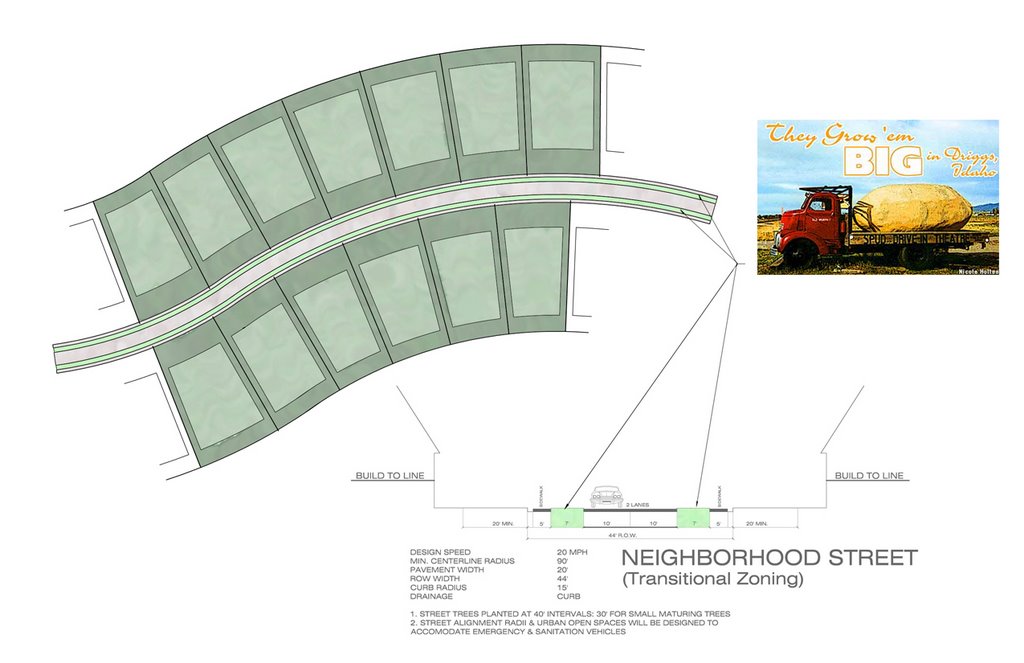
On this typical, suburban street there's a space directly contiguous to the curb that creates distance between the whizzing cars and the relative safety of the sidewalk. It's a strip of grass seven feet wide.

It is maintained by a homeowner who uses gasoline made from petroleum to mow it short, and nitrogen fertilizer made using natural gas to keep it growing tall. Weeds are kept under control by using pesticides that wash into the gutters and down the storm water system into creeks where they pollute the water supply of both humans and all other creatures down stream. The lots on this street are 100 feet wide creating 700 square foot green strips in front of each home. John Jevons, states that it's possible for even a modest farmer to raise 200 pounds of potatoes per year in a 100 square foot area. That's a possible 1400 pounds of potatoes per house. At 330 calories per pound that's a total of 462,000 calories or 45% of the calories necessary to sustain the average teenage male for entire year. If he really likes potatoes.

It appears possible if you live on this street to reduce the amount of gasoline you use, reduce the amount of air pollution your dirty lawnmower belches out, reduce the about of natural gas used to make commercial fertilizers and reduce the amount of chemical pollutants in our water system all while growing almost half the calories your son will need for a year in an area that is not consider arable. I'm not really suggesting that this specific part of your plot is the best place to start actively cultivating land currently considered unfit for raising food. Or that man can live on potatoes alone. Maybe just the idea of starting to grow food in your front yard flower bed is enough (and you're going to want to add in some beans and tomatoes) but it does begin to suggest that our current definition of where we can grow food is in need of an update.

More...

Monday, January 22, 2007

walking the path

The Dervaes family is fueling a revolution; not with fossil fuels but with inspiration and information. They have been pointing the ways towards a more sustainable future and sharing their walk with the world at their website Path to Freedom. They're making changes and adding features to increase access and improve their platform. Please consider helping PTF continue to aid our world during this period of great change. You can read more about their upcoming changes HERE. You can help with a donation HERE. And you can listen to a conversation with Jules Dervaes in Autumn of 2006 HERE or by clicking on the image above.

Thursday, January 18, 2007

Monday, January 15, 2007

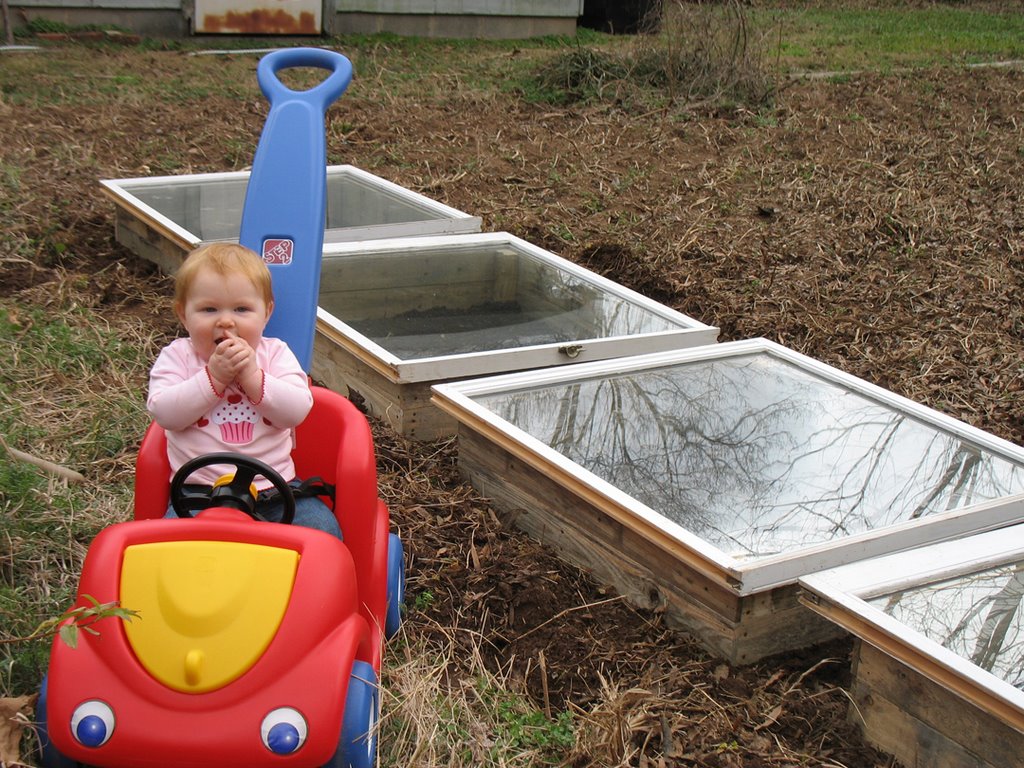
cold frames

yes, her car is made completely of plastic. no the irony doesn't escape me.

Monday, January 08, 2007

2007 predictions

Plenty of people familiar with the field of energy descent are making predictions and resolutions for the new year. Most of mine overlap with those I am going to recommend as reading so I'll leave it at that.

Sharon Astyk
Jeff Vail
John Michael Greer
Rev Sam
Rob Hopkins
GG Team

I am interested in your plans for 2007. What changes will you personally be making as the Great Turning continues?

Monday, January 01, 2007

Wednesday, December 27, 2006

another sunny spot

Until last weekend I had never met the woman who lives across the street from me. That is embarrassing to say as I’ve lived in my home for more than four years now. I know many of the families who live on my short street but I had never met Jean until last Sunday. She is an elderly lady with bright eyes who is not afraid of silence.

We didn’t talk about peak oil or the tragic loss of top soil in our country. But she did say she’d seen my chickens one day when they ventured into my front yard. She told me about how living in our small, southern town used to include keeping backyard poultry and sometimes even larger livestock. She lamented the fact that folks no longer garden; that people aren’t as neighborly and don’t get together to share as often. We both apologized for not having met sooner. I brought up the idea of me gardening in her backyard. She is no longer able to do the physical work of growing food and was happy to hear the idea of me using her former garden to do so. We both agreed that sharing the food, not only between our two households but also with some of our other neighbors, would be a good idea. One such neighbor has since offered to help and has begun to deposit fallen leaves in a pile we’ll use for compost and for mulch.

The full version of this story about a holiday expansion of my neighborhood gardening efforts appears HERE as part of Groovy Green's 13 Days of Joy series.

Monday, December 25, 2006

merry christmas

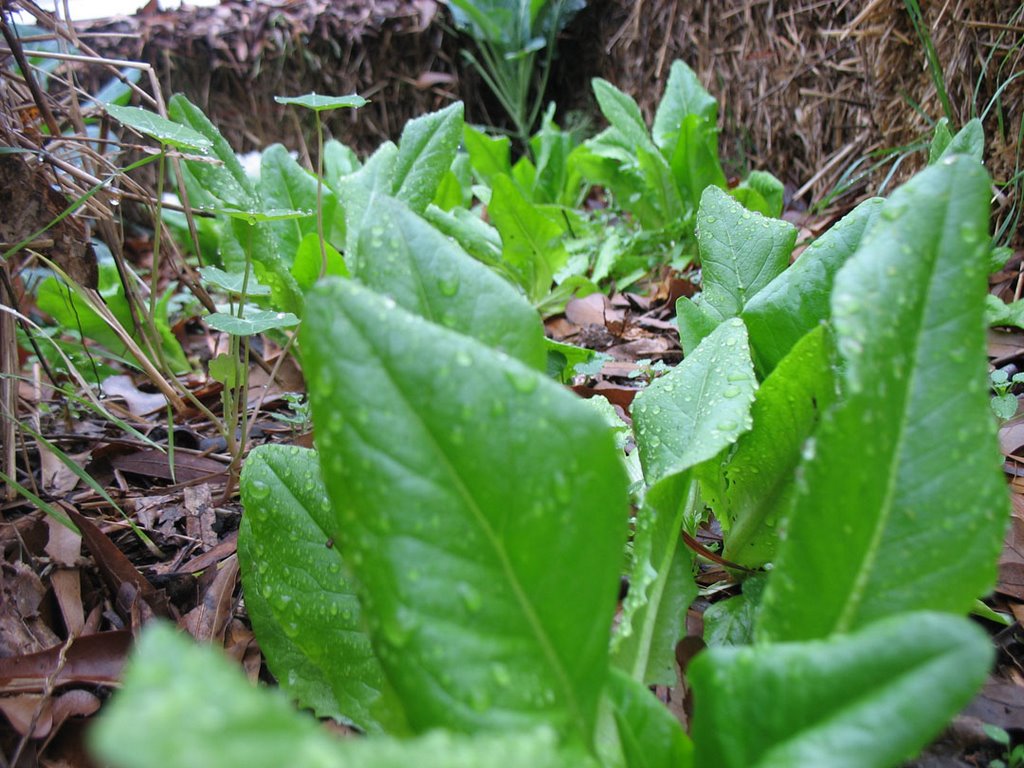
Amish deer tongue lettuce in the cold frame.

Sunday, December 24, 2006

clover cover

A warm Decemeber means my mistake of waiting too late to put out a cover crop isn't as much of a problem.

Saturday, December 23, 2006

i spy

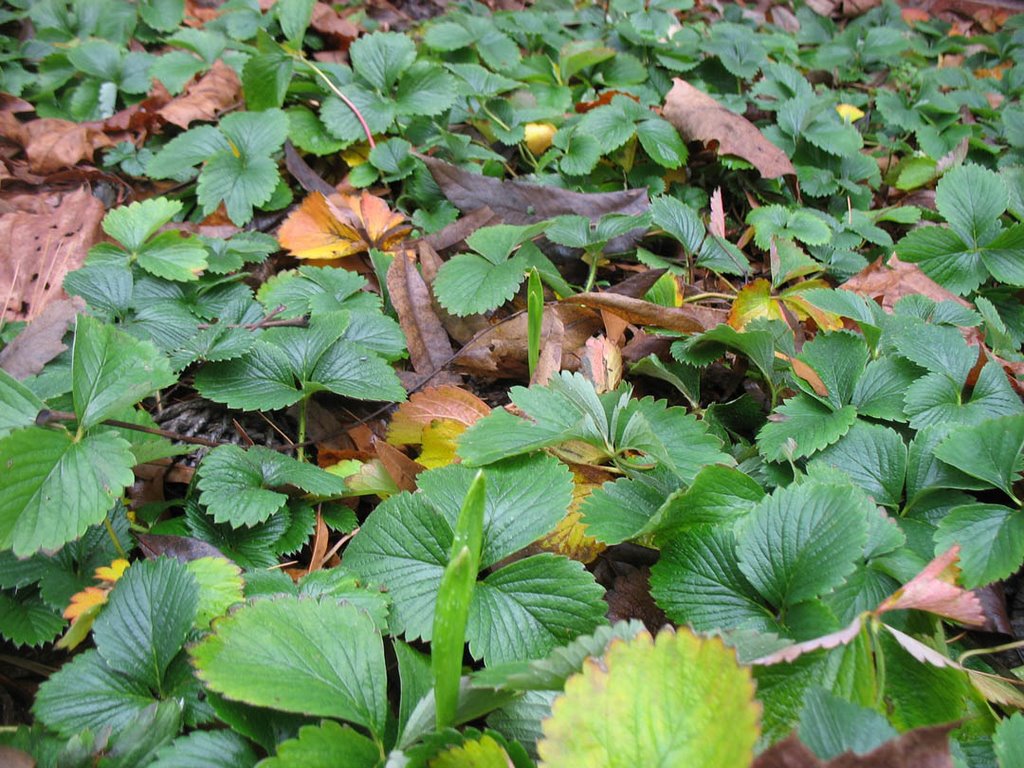
garlic growing up through my strawberries.

Thursday, December 21, 2006

buried treasure


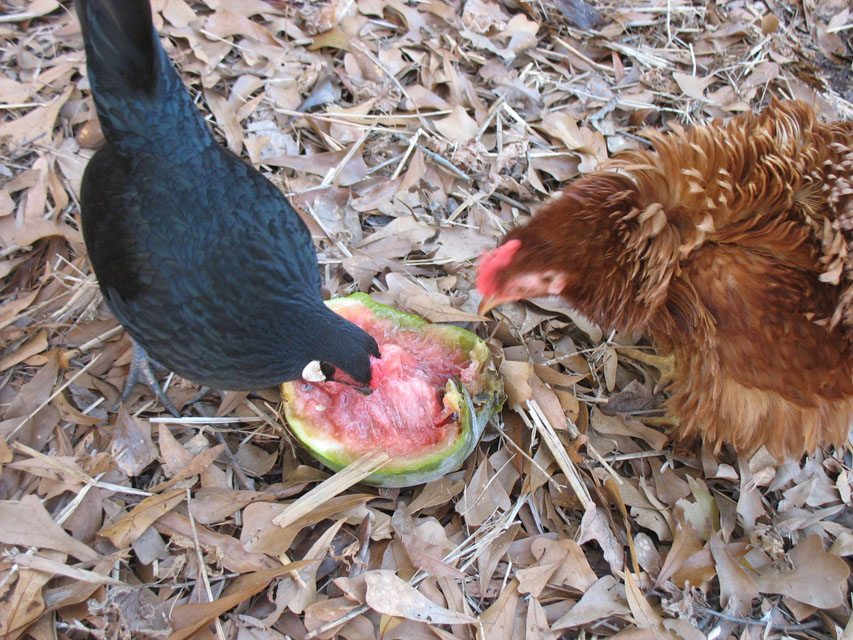
While cleaning out the garden I discovered a small watermelon tucked up underneath a rosemary bush. After spending all autumn outside it wasn't especially yummy-looking to me but the chickens loved it.

Monday, December 18, 2006

a picture speaks

I have a lot to do and a lot to say. What I really mean is that I have a lot to write- the sooner the better. So for the time being, I will be posting only images with maybe brief descriptions at this location. I am also hoping to jot down quick notes here about what I plant in the garden and when. Other than that, I'll be doing any posting of Do-It-Yourself-How-To's Here and spending serious time on this project.

Hopefully I'll be back with a big ole world changing suggestion in a few months. Here's to making change because this is just tragic...

Friday, December 15, 2006

opec media circus


If you need any amusement this holiday season aside from outdoor Christmas decorations gone mad, you’re welcome to review this week’s OPEC circus sponsored by corporate media. For the second time in nine months the Organization of Petroleum Exporting Countries got together and decided to cut production; this time by 500,000 barrels per day.

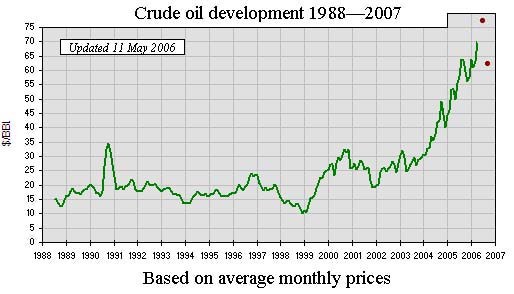
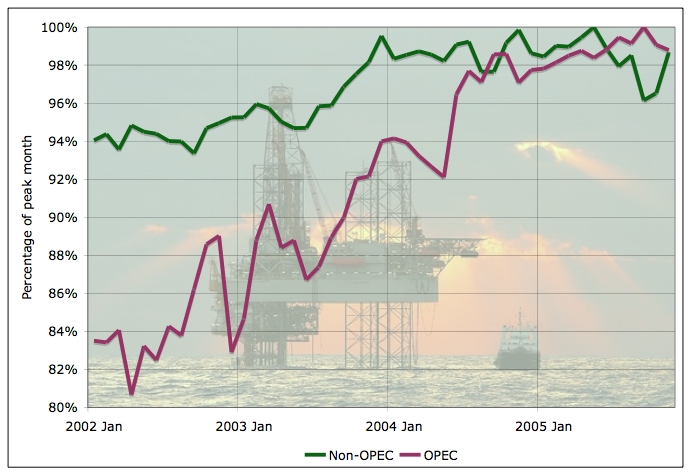
Funny Monkey Number One: The price of oil is dangerously low. Say what? OPEC decided to cut production by 1.2 million bpd back in October to, “halt a 10-week, 25 percent price decline.” Remember this graph?

Oil at anything other than about $20 a barrel is historically high. And yet they claim to be “stopping the price slide” or that they have “determination to manage the market and prop up prices.” I know we’ll never see $20 per barrel oil prices again. But I also know the real reason why. So how come the corporate media of our oil importing countries just sits there stupid and eats up this nonsense? Perhaps they actually buy this…

Funny Monkey Number Two: There are seasons of high demand for oil. In Juneau, Alaska it rains more than 250 days a year. I once bought a t-shirt there that read, “Juneau Rain Festival: May1, 1994 – May 1, 1995. The point is that it’s almost always raining. The same is mostly true when it comes to our demand for oil. Those nice folks over at OPEC delayed the latest cuts until February 1, 2007 so as not to negatively affect our energy needs during “winter heating season”; which ends at least 8 full weeks before we enter “summer driving season”. Still we hear this corporate media nonsense year after year, “By postponing a further reduction until peak demand has passed, OPEC is acknowledging consumer countries' concerns that a cut now would drive prices higher and hurt their economies.” Blahblahblah. We’ll hear the same thing in April only it'll be about summer driving. OPEC perpetuates the myth that during the majority of the year we Americans are using relatively little energy and that we just need a bit more oil during certain seasons, and our corporate media is happy to help them do so. Does the media do this because they're funded by advertising dollars from big oil and big car companies and a host of other corporations dependant on cheap energy to keep us consuming? Well maybe, but I also think they just do not get the fact that…

Not So Funny Monkey Number Three: OPEC is peaking in oil production.

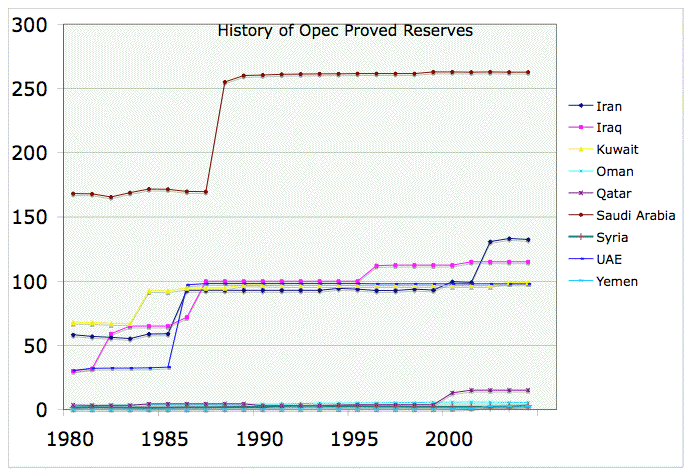
Now I ask you, if you were one of the countries that was responsible for the continuation of The Western World’s Great Big Fossil Fuel Party (admission by invite only) what would you do when you reached the peak of your production capacity? Would you come right out and say, “Sorry guys, the keg’s dry.” Or would you, in a market of sustained high oil prices, decide to voluntarily cut production? Think about it. What they’re doing would be like Starbucks saying, "Now that we have everyone addicted to $2 per cup caffeinated beverages we're going to be closing some stores." OPEC had this to say in a press release about the circus this week, “The Conference further reiterated the Organization’s determination to take all measures deemed necessary to keep market stability through the maintenance of supply and demand in balance, for the benefit of producers and consumers alike." Hello dummy media organizations, in case you really aren’t getting the hint OPEC is trying to tell you it has peaked. They're ready to give Richard Heinberg a call. Remember this is the same organization that once reported its oil reserves did this.

This group is interested in stability for as long as it can hold together a market for its product. But make no mistake, it is has never been interested in being forthcoming about the truth. And here sits the corporate media like three little monkeys.

So there you have it. To bad the truth isn’t as fun as a circus. Happy Holidays.

NewZ Coverage, NewZ Coverage, A Stupid Press Release & The Real Deal

Some of the above charts from a responsible independent media resource, The Oil Drum.

Monday, December 11, 2006

winds of change

Almost every day I believe in my ability to make great change- in the ability of ordinary citizens to affect the change that will avert the great calamity that is beginning to bear down on us. Today though I am hung-over from a weekend of too much reading about all the madness in the world. I am more depressed about our situation than I have been in a while. I know this feeling will pass. It always does but today I feel like part of the virus club (6.5 billion members and growing) eating away at this planet. I wonder if influenza ever feels remorse.

I have a sneaking suspicion that the Luffa phenomenon is also affecting me. My most recent post to this site was an essay of ideas about how we as a people must make change in ourselves (among other rambling thoughts). It was thoughtful (I thought) and took a bit of thinking and writing to complete. It has received very little attention. On the other hand, a few weeks ago I published a 20 sentence explanation on “How to Grow a Luffa Sponge” that took 15 minutes to create. It received tens of thousands of visitors in less than a week. I guess I should accept the fact that people are more interested in learning how to grow their own shower sponge and less interested in listening to the sprawling thoughts of a peak oil aware 30-something. That might not be such a bad thing. It points to the fact that people everywhere are interested in doing and growing things for themselves. It might mean folks have this wonderful new source of communication in the Internet and they are using it to search out ways of being more self sufficient and ways of living in a more sustainable manner. Perhaps the rejection by omission of my most recent essay should serve as an aide memoire of something my wife is fond of foretelling; as peak energy unfolds people will want to read about simple changes they can make in response to the problems of the world. Actually she just says, “Keep it simple stupid”. So that’s what I’ll do. I will write about a simple way to fix the problems associated with peak oil, climate change, national insecurity and wide spread social injustice. Now let’s see... what simple, elegant solution could address so many problems?

Hmmmmmmmm…

I got it. How about adding 100 million new farmers in America? Sounds crazy you say. “100 million farmers, that’s wild!” I’m sure the questions are already beginning to bubble up in your brain. Who will they be? How will we create them? Where will they farm? What does it take to fuel a revolution? Hint: The answer isn’t oil. A return to production as a rejection of pointless consumption is a fabulous path to travel. A return to small scale organic agriculture would go a long way towards healing ourselves and our land physically, mentally and emotionally. It would reconnect us with the natural world we ultimately depend on for life, liberty and the pursuit of happiness. It’s where we came from as an idea for democracy or so thought Thomas Jefferson. And it’s where we’re going again whether we like it or not. In 'The Great Turning', David Korten writes,

"some critics will surely complain that 'Korten wants to change everything'. They miss the point. Everything is going to change. The question is whether we let the changes play out in increasingly destructive ways or embrace the deepening crisis as our time of opportunity … it is the greatest creative challenge the species has ever faced"

Why fight it? The simplest way to make lemonade from our citrus circumstance is to find a clever, uncomplicated way to turn the world around. What better approach than through food. Not to mention the process of building soil sequesters a good bit of carbon from out of the atmosphere but now I’m giving away too many ideas. Why would Oprah buy the book if she could just read it all right here? Plus I’m going to need some help with this one. I’d better first talk to Sharon Astyk and see if she’d like to lend a hand. The truth is this project was Sharon’s idea and I imagine we’ll get help from plenty of the other really smart people already working to make this world ready for a change.

OK. 100 million new farmers as a way to heal our world.

Can we do it? Of course we can.

We have to.

Wednesday, December 06, 2006

sankofa

The following essay is a colletion of thoughts orginally published at Groovy Green.

Live your beliefs and you can turn the world around. -Thoreau

So I sent out a few letters post midterm election 2006, to get a response from those who are peak oil aware. The Democrats took control of the United States House of Representatives, a name that many in my generation find facetious. They also appear to have taken control of the Senate and while I don’t have a readymade joke for that body of Congress, please don’t assume I think them any more capable of addressing the issues of energy and environment currently facing the American dream. We are about to awaken from our slumber to the cold realities of recently dismissed phenomenon like physical limits and laws of nature. When I sent out my impromptu poll I was curious as to whether any of those concerned about the converging calamities associated with a consumer-based society believe that the recent swing of the political pendulum will have any effect on the readiness of America to weather the coming storm. The results were all but unanimous.

Let me stop and say that I am not by manner a pessimist. This might seem like a lie if you know me only through my shared thoughts of essay but in truth I am an optimist. Not out of belief but out of practice. I have been told time and again what was and was not in the cards concerning my future. Sometimes I wanted more than others thought was possible and on many occasions I have been pleasantly pleased at my ability to transcend their expectations. So grew an idea about ability that exceeds human anticipation without forgetting that there are reasonable limits to achievement. In other words I find human beings often underestimate their own abilities while simultaneously overestimating the aptitudes of technology. We are at once ready to believe that we are doomed because we can’t personally change and prepared to be saved by some unknown outside force. Sounds like a new religion.

Those whom I polled saw little hope that reasonable action would be taken in the United States concerning the coming global peak in oil production and the following energy decent- from a governmental standpoint that is. This point emerged: Do not count on the American Democrats to save the day. I could not help but have expected such an answer. U.S. Baby Boomers might turn out to be the most destructive generation in all of human history, but their failure to properly govern democratically, that is their susceptibility to big business as a corruptive influence, has my generation turning up its nose at even an unexpected Democratic victory in the shadow of Hubbert’s Peak. And who can blame them? However, that does not entitle us to adopt an attitude of defeat.

Many traditional environmentalists work from a place of anger. They are angry that others have dirtied their air and their water. They are angry that the government has allowed this to happen. There are a dramatic number of cases of childhood asthma attributed to power plant emissions. Our drinking water is full of toxins and hormones known to harm the health of countless Americans each year. The specific issue that most recently jangled my anger was mercury levels in big fish so strong that my pregnant wife was advised not to eat tuna. Industrial America has made it unsafe for her to do so. Yes, that’s enough to make anyone angry. From all of this anger comes an offensive to stop the pollution through active means. I’ve just read Derrick Jensen’s, Endgame Vol. I The Problem with Civilization. Mr. Jensen is an author and activist who goes further than most and calls for the active dismantling of industrial civilization. His arguments about fighting back and forcefully creating change are an easy sell to those who believe their clean air and fresh water have been taken from them. Many Americans are awake enough to see the extreme degradation of our environment as a direct consequence of our consumptive way of life. Even if they stop short of working to bring down civilization, these concerned individuals are willing and ready to fight back on behalf of Mother Nature. But I argue that strategy will never work. It over looks one simple fact. No one can force anyone to do anything. Sure someone could hold a gun to your head and force you to recycle but as soon as the gun is removed so is the incentive to recycle. The end result of such an exchange will probably establish in you a resentment of recycling and a reluctance to do so; the opposite of the intended effect. People can not be forced to believe in something. And unless they believe in something, they can’t change their behavior.

I am calling for a new way of imagining our relationship with the environment. Most people view their lives as their turn on the dance floor. They see themselves as having inherited the Earth from their parents and feel free to do with it as they please. I argue the opposite, that we are borrowing the Earth from our children. What we do they will have to deal with. This change in perspective separates the takers from the leavers. Daniel Quinn in his monumental work Ishmael, describes the human race as being made up of two groups; those who take what they can and those who leave as much as possible. Obviously those who are actively involved in polluting our planet are in the former group. They see themselves as free to do as they please and to take what they want regardless of the consequences left for future generations. I argue though that they are human and as such can not be forced to do anything otherwise.

Corporate America lobbies heavily against environmental legislation. When these laws are past, they are often later repealed or altered so as to make them less effective. Sometimes they are simply ignored. If all of these efforts fail, big business is usually ready to fight in court with well funded lawyers. When activists attempt to physically shut down caustic practices like nuclear power generation they are sometimes even met with violence, state sanctioned or otherwise. Even with righteousness on your side you can’t effectively force anyone to be environmentally responsible. It just won’t work in the long run.

The focus must first be on us. After all, we are the ones using the electricity created by Industrial Power Plants. Each of us is responsible for the products and services we buy and use. Our support of the system is to blame for the destructive nature of We the People (lately read We the Consumers). I agree with those who say that corporations have used psychological strategies to convince Americans to adopt consumptive lifestyles. The odd reality is though that even after we awake up from the spell of such strategies most of us continue to consume and in doing so prop up a system of destruction and pollution. I am not advocating that those of us who understand how horribly damaging our way of life has become should run off into the woods and abandon all we have come to know. Such a cold turkey response to the habit of industrial civilization will probably not last and will most certainly alienate us from friends and family. I am advocating though for a change in focus for those of us lucky enough to understand the great poisoning that has taken place and who want to beat it back.

We must change ourselves. We must change our habits. We must slowly drop out of consumer culture. We must remove our support of corporate monsters and return our support of local businesses. Forcing others to change won’t work but making real change happen in our own lives will. If you don’t support the production of nuclear waste and your electricity comes from a nuclear power plant, find a way to change that; not by protesting in front of the plant but by making your own power or, as my friend Sharon is doing in her kitchen, do away with your need for electrical power. “Wow” you say, “That’s crazy”, but the truth is it’s not. It’s the easiest, most effective way to make a difference. You won’t change the nuclear power plant people. You could dedicate countless hours of time to legal battles with those folks and would probably wind up with little to show for your efforts. Or you could walk away from their toxic waste and take your financial support for their power with you.

At this point I might be losing you because some obvious, classic questions arise from this direction of action. Sticking with the nuclear power plant example, the question is, “How do you make your own power or do away with the need for electricity?” There isn’t just one answer to this question. Start with evaluating how much electricity you use. Next work to reduce that amount. Don’t give into the idea that the change must be instant. The lack of perfection is an oft given excuse for a lack of effort. It might take years to achieve your goals in their entirety but that journey could start today. Perhaps you can provide your own solar or wind generated electricity. Before you scoff at the cost, do some investigation. Check into price, review government programs that offer financial incentives. Look into grants, build our own wind turbine, build a gigantic hamster wheel for your over active dog- my point is that in these efforts you will find, if you work hard enough, the solution to your problem. It lies within you, not as blame to be placed on others. I will guess that as you free yourself from the yoke of the nuclear power plant that others will be eager to learn more about what you did. There will be others who want this change as well and your efforts will help them to make change, not by storming the gates of the power plant but by removing your dependence on it and then helping others to do the same.

Perhaps your thinking that there are those who will never change. I understand your concern and I agree that there are those who will resist change with great force. The vast majority of people however will not. Most people are in the habit of following the lead of others. It’s not necessary for those of us trying to make change to convince everyone we’re right. We only have to become a small force of change, maybe 12% of the population. That number of people doing things differently, making a difference not on the picket lines but in our own lives, will be enough to help fuel a revolution of change across our country. Not a change in political parties but a true change in the attitudes and actions of Americans.

When discussing change there seems to be two typical responses concerning how and why change happens. The first is that the government mandates it and the second is that the invisible hand of Adam Smith makes it economically more attractive. Most people will use these responses as the only reasons for why things do or do not change. These people fail to recognize how defeatist this attitude is. These people have given up their own freedom of choice and the freedom of others in their society. Of course there are other reasons for making or not making change. In fact for most of the really important decisions we make in our lives, we don't require the permission of Congress or rely on rational financial sense. We don't get married to a certain someone for either of those reasons, we don't have children for those reasons, we don’t eat healthy foods for those reasons and I am going to assume that my friends don’t associate with me because President Bush asked them to or because they gain economic benefit from me.

Have we completely lost the ability to make our own decisions as a society about what is best without the help of the government or the market? Societies have historically made decisions about common items for the benefit of community and not because of the government or economics. Yes our society is fractured and in bad health so we all look like greedy bastards only interested in grilling out on the back porch but that is not at the heart of who we are as human beings. I reject the idea that reasonable responses to problems are possible only if it's affordable or if we're told we legally have to. I'll go further and say that I am a freer man than anyone who would argue otherwise.

We have great power over those who derive their wealth through the complex systems that force us into dependent relationships. If we step out of their systems of enslavement we can again do for ourselves what they want to charge us for. It’s been said before that growing your own food is one of the most radically rebellious acts you can perform. As I learn to grow my own food I see how true this really is. I am becoming less dependant on Archer Daniels Midland and other such agrobizcorporations. ADM is at the heart of industrial agriculture; a practice that is stripping away topsoil that took millions of years to create. It is using non-renewable resources to pesticide poison our foods and creates oceanic kill zones where sea life can’t live. It is irresponsible and destructive and every time I plant a potato I am supporting less of this legacy, this terrible bequest we are leaving to our children. I’m not going to protest at the front doors of ADM, I’m just going to quietly flip them the bird while I work in my garden. Already my neighbors are interested.

There are other simple ways in which we can once again take command of our own needs. Harvesting and recycling water, building clever homes from local, renewable materials. Harnessing the energy of the sun in direct ways; all of these are techniques that have fallen out of favor because of briefly available fossil fuel energy. These behaviors seem strange because during the last four or five decades citizens of the United States have been living in a manner that disregards ecological consciousness. Cyclic systems were abandoned for linear ones in which oil and other fossil fuels were put in at the beginning, products were used in the middle and in the end the waste was buried in the ground. Our recent lives haven’t been dependant on natural cycles so we haven’t paid them any attention. What a long winded way of saying that these aren’t radical new ideas, they’re the wisdom of our mothers and fathers; the ways of doing things that worked well for thousands of years.

Sankofa is an African word that means to go back and retrieve wisdom and use it to move forward. In it lies the key to our future. With it we can step out of corporate dependence and without throwing a punch or filing a lawsuit we can whisper to those who would destroy my daughter’s planet, “Go away, we don’t need you.”

I can’t say I’m not pleased that the Republican stranglehold on our federal system of checks and balances has come to an end. It is the result I was hoping for. A sense of anxiety in me has receded following Election Day. But almost instantly that anxiety was replaced with a sense of fear. What if this legislative body doesn’t do any better? It’s time to stop placing our bets on others and recognize in ourselves the possibility of something those fools can’t conceive- a society of just rule and inclusion; a system of operation that allows human beings to carry on with an experiment that hopefully becomes more benign, more compassionate and more responsive to the ecological systems that hold ultimate veto over our existence.

Wednesday, November 22, 2006

holiday

As we enter into the Thanksgiving weekend of 2006 I am in the midst of quite a few projects. For those of you interested in the sorts of things I am interested in, let me recommend some reading. I will make time soon to post here with more original work.

From Sharon Astyk on self sufficent suburbia... "I have been talking a lot lately in various places about adaptation - the ways in which we can use our existing infrastructure to live a lower-impact life. And so, I wanted to describe how that might work. I chose as a model the suburban home of a college friend of mine, who coincidentally has become aware of peak oil and asked for my advice not long ago. She lives in an exurb of Boston, with no direct public transportation (there is a train line 15 minutes away), in a fairly conventional suburban home with her partner and two children, 1 1/2 and 5." more...

From Zane on floor boards and stillness ... "It is now already well into the evening as I write, and soon I will be ready to head up to the cozy loft, above my office here, and read for a while before bed. I have largely grown accustomed to these long days of work. I am starting to understand that this schedule is not a short-term thing, while we get set up, but it is the new rhythm of my life, and I like it. Projects for living, like building a house or growing a garden—these are satisfying jobs." more...

From Liz Deane on frugality... "
I started reading about what is called "voluntary simplicity", "frugality", or "tightwadding", and devoured just about every book on the subject. I don't own any of them, having used the interlibrary loan system, but if I had one of those books lying around, I could probably open it up and find a list of things the average person can do to save money. Since I don't, I thought I'd make a list of things that we did to put more money in our bank account, where it belongs. These are all simple suggestions for anyone who is looking to cut back on the flow of money that makes it's way out the door each month." more...

From Douglas Barnes on Seed Balls... "Seed balls may be obscure in North America, but in parts of the world already badly damaged by human activity, their use is easily recognised. The BCIL Alt.Tech Foundation of India uses seed balls to regreen Bangalore. And as most of the planets deserts are the creation of mankind, we can follow their lead to undo the damage we have done." more...

Best wishes on this weekend of reflection and family.

Monday, November 20, 2006

very busy

This message is hard enough to convey even when you speak the native tongue.

Very busy at the moment. Back soon...

Tuesday, November 14, 2006

subaru

I'll be eating dinner this evening with Subaru executives and touring their new plant tomorrow about which they say,

"The average household sends more to a landfill than the entire Subaru manufacturing plant in Lafayette, Indiana. The Subaru plant is the first auto assembly plant to achieve zero landfill status - nothing from its manufacturing efforts goes into a landfill. It's all reused and recycled. The Subaru plant was determined to be the first auto assembly plant in the U.S. to be designated a Backyard Wildlife Habitat by the National Wildlife Federation in 2003. Deer, coyotes, beavers, blue herons, geese, rabbits, squirrels, meadowlarks, ducks and other animals live on the plant property in peaceful coexistence with the Subaru plant."

If you have any questions you'd like me to ask the folks at Subaru please leave them as comments. A full report to follow over at Groovy Green.

Thursday, November 09, 2006

one billion trees

I'm a big fan of trees. In fact I like to make the argument that trees are much more intelligent than human beings; at least human beings in the United States of America born after the year 1950. Let me explain.

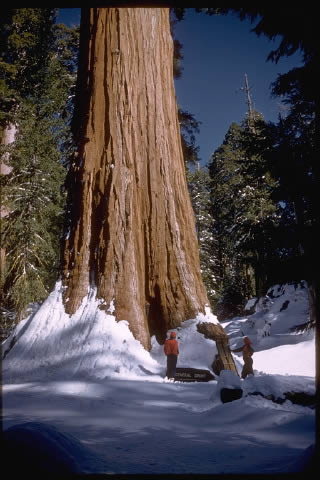
Trees grow from tiny seeds into enormous creatures that can live for hundreds of years. Trees rely on their ability to obtain water and other necessary nutrients from their immediate environment. Talk about local, trees never move. They put down roots and absorb what they need from the surrounding soil. They also make leaves that absorb solar energy and transform it into food for the tree. Their leaves breathe in carbon dioxide and breathe out oxygen and water vapor, all in exchange from the surrounding air. And when the leaves have done their duty they are dropped to the ground where their nutrients are made available all over again. In other words trees meet all their needs, sometimes for a very, very long time, without ever moving from where they were born.

In contrast, Americans of the post WWII era have established a way of life that is incredibly dependant on constant movement. None of us could survive without constantly moving from one place to another to collect supplies and deposit waste. Our food is grown, on average, 1500 miles from where we eat it. The nutrients used to fertilize this food come from even farther away. We pump water from rivers and lakes through complex systems of pipe and wash away waste in a similar scheme. Surviving the elements is accomplished by using resources from all over the planet to build houses that require mechanical systems to maintain a comfortable temperature. And then there’s all the stuff we tell ourselves we need.

Constantly on the go, we have even developed a system by which we burn fossil fuels and therefore pollute our air in order to power vehicles to propel ourselves faster over impervious surfaces made of petroleum that need constant upkeep so we can get from one place to another in a great big hurry. Why? Because we can. Which sounds smarter to you, learning to live with what you have or always running around wanting more?

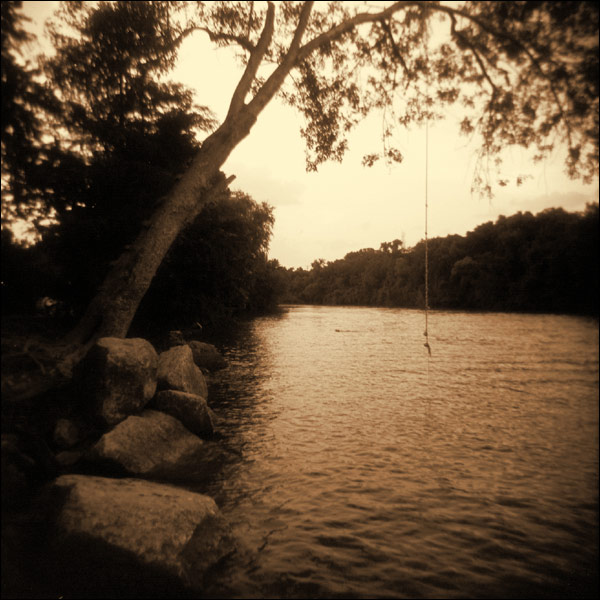
Philosophical queries aside this is why you (yes I mean you sitting right there at that your computer reading this) should plant trees. Trees clean our air. In addition to absorbing carbon dioxide, a Chicago study showed 120 acres of trees can absorb up to 5.5 pounds of carbon monoxide, 127 ponds of sulfur dioxide, 24 pounds of nitrogen dioxide, and 170 pounds of particulates per day. The absorbing action of tree roots brings nutrients from subsoils to the surface for use by other plants. One tree can remove as much heat from a sunny southern afternoon as 5 air conditioning units running full blast. Trees increase the humidity of dry climates and can serve as a way to slow down winter winds. Trees provide habitat for other species of insects, birds and mammals. They also provide food in the form of fruits and nuts to both animals and human’s alike. Trees provide building materials, paper products, fuel for heating and cooking and a wonderful place to hang a rope swing.

You may not agree with me that trees are actually smarter than we are but it seems obvious that they are a wonderful part of life on this planet. So I have a challenge for you.

Wangari Maathai, the woman who won the Nobel Peace Prize in 2004 is calling on us humans to plant 1 billion trees in 2007. “When we plants trees, we plant the seeds of peace and seeds of hope.” Please join the effort and help me and others plant trees. If you do, please send me a photo of the trees you plant. I will share your images. Thank you.

One Billion Tree Campaign

Trees For Life and Heifer International (trees make a wonderful Christmas gift)

Statistics referenced in this post:
Our City Forest
Trees For You
Other Study Summaries

Thursday, November 02, 2006

the great leaf wrangle of 2006

It's now a family affair. Swing by my other haunt and check out the formal contest. Leaves, leaves everywhere. If you're curious, young Keaton is working to increase the surface area of each leaf therefore decreasing the time it takes for the pile to decompose. I didn't even have to suggest it. She just started crunching them all on her own. She's also tried directly absorbing their nutrients but we're teaching her it's much more tasty to break down the leaves and feed them to plants and then eat the plants. She's learning.

I must also mention how much help my brother has been in this year's leaf wrangle. Without his truck and his keen eye for compost feedstock we wouldn't be winning the contest 209 bags to 191 bags. Thank you Jon.