Showing posts sorted by date for query sunny spot. Sort by relevance Show all posts

Tuesday, February 22, 2011

neighborhood farming


This week we're going to examine a strategy aimed at expanding the area available for growing food in a particular neighborhood. It happens to be the neighborhood where I live. The map above shows my town. My neighborhood is marked by an asterisk. I don't have an abundance of sun in my yard so a few years ago I went looking to see if other people had more sun and were interested in growing food. Here's my neighborhood.


Here's my property in red.


I started by going across the street and asking my elderly neighbor if I could garden in her backyard. Then I recruited Eric who grows food in his backyard and is transitioning into a career as a farmer. Next I was able to start a garden in the backyard of the rental house next door to my property. It was part of a bartering arrangement whereby the landlord agreed to take down a few dying trees and in return I now grow food on her property. All of these active gardens are shown in dark green.


Several other people have expressed interest in helping to grow neighborhood food and/or have offered a sunny spot for a garden. These properties are shown in light green.


The biggest single area under cultivation is the vacant lot down the street. I've had some sort of a garden on that property for four years but this year it has been greatly expanded. It's shown in yellow.


Next we have the people interested in buying food. In years past I have given extra produce to these people, sometimes just leaving it on the backdoor step of neighbors I've never met as a way to start up a conversation. This year some of these people might formalize the relationship by becoming paying customers. These folks are shown in blue.


Other people in the neighborhood have offered compostable material, especially fallen leaves and grass clippings. Most of them have also expressed interest in helping to grow food and/or buying it. In fact most of the property owners represented on this map have overlapping interests in this neighborhood farming effort. These people are shown in orange.


Lastly there's the elementary school right around the corner. They have a great courtyard perfect for growing food and quite a bit of land out back that could be used to grow a great deal of vegetables. Frankly I haven't had the time to seriously address this opportunity... yet.


All of this needs work. Yes we have 462 gallons of rainwater storage capacity at the site across the street from my house and 12 raised beds and a great old apple tree. At the vacant lot however we don't have enough mulch stored for this coming growing season and we'll have to use municipal water unless I can find enough people willing to put in a decent rainwater harvesting system. A formal work schedule has yet to be developed. And the school, a huge opportunity, has not been included as of now. In other words this is, like any collective effort, an ongoing project that I imagine will continue to evolve. But it is the beginnings of model of expanding food production efforts beyond the boundaries of one particular property and out into the surrounding community. I can't wait to see where we go from here.

Tuesday, February 01, 2011

the farm/garden design process

"Planning is an unnatural process; it is much more fun to do something. And the nicest thing about not planning is that failure comes as a complete surprise, rather than being proceeded by a period of worry and depression.” John Harvey-Jones

While it’s certain possible to over intellectualize the process of design, it’s also just as likely that doing without thinking can lead to failure. Brainstorming about garden design is easy enough for most people. Many of us can conjure up images of gardens or at least thumb through online images of chicken tractors and victory gardens and dream about doing that in our own yards. The difficult task seems to be translating these visions into successful projects- taking information and putting it to work; the result of which will be the experience you will need to be successful in the long run.

As a place to start we’re going to discuss the process of design needed to organize the farming/gardening efforts of entire property. The first step is the brainstorming mentioned above. It helps to get an idea of what you want out of your efforts. To that end we used a questionnaire to organize your Needs & Wants. The second step is to take a Site Inventory of your property. The next step is to begin deciding what might go where. Of course this is the part that requires an understanding of how garden and growing food works.

At this point let me put you at ease by suggesting that you are definitely going to make some mistakes. Don’t let a fear of failure paralyze you. Maybe you don’t feel like you have enough knowledge to know where the chicken coop should go or if a particular spot will be sunny enough for your vegetable garden. The best you can do is to read and ask questions of knowledgeable people regarding these issues. At some point though you’re going to have to make a decision and get at it. One thing of which I am certain is that if you do not move forward with your gardening project, you will never eat food from it.

So now is the time, right or wrong, to begin making decisions about what is going where. Bubble in your decisions on a copy of your Base Plan, the plan you came up with as an inventory of your property. All your Needs & Wants should be represented graphically on this Bubble Plan. It is going to change as you share it with people and they offer constructive criticism. It’s going to change as your Needs & Wants change. It’s going o change as your budget dictates and for a whole host of other reasons but at least for now you need to have a starting point from which to begin- a point from which to begin the actual change. This Bubble Plan will offer you something else as well. It will help you organize and further design the individual areas or sites of your property.

Say for instance you have designated your front yard as the primary place for your vegetable garden. At this point you have a large bubble encircling the front yard with the words, “Veggies Go Here,” written across that bubble. Once you’ve finished bubbling your entire property you can revisit the front yard bubble and begin to refine its design. Ask yourself, What does that garden space actually look like? Where are the paths? How wide are they? Where does the tall stuff like corn go so as not to shade out the short stuff? Do you need water beyond what rains? If so where will it come from? Will the hose reach? How many tomatoes will you grow? Peppers? Kohlrabi? Do you need a fence? Once you’ve established an over all plan for your property you can drill down into the design of these specific sites without feeling overwhelmed. This strategy breaks the design process into a Master Plan for the overall property and Site Plans for individual sites throughout your property. Your Master Plan is just a refined Bubble Plan. Here, let’s draw it. If you haven’t figured this out I’m more of a visual person.


It’s important to remember that Design is not a noun, not in this context at least. Design is a verb and refers to an ongoing process. A Plan (Bubble or Site or Master) is the noun, the product of the design process. The arrows that loop back to the beginning of this diagram represent the fact that both the needs & wants and the site conditions relevant to a particular farm or garden project will constantly change. It’s alright to stop along the way and consider a Master Plan or a particular Site Plan to be “finished” so that you don’t go crazy with constantly redesigning your property. But recognize that over time your Plans will change while the process of design will continue.

Thursday, March 18, 2010

neighborhood farming


This week we're going to examine a strategy aimed at expanding the area available for growing food in a particular neighborhood. It happens to be the neighborhood where I live. The map above shows my town. My neighborhood is marked by an asterisk. I don't have an abundance of sun in my yard so a few years ago I went looking to see if other people had more sun and were interested in growing food. Here's my neighborhood.


Here's my property in red.


I started by going across the street and asking my elderly neighbor if I could garden in her backyard. Then I recruited Eric who grows food in his backyard and is transitioning into a career as a farmer. Next I was able to start a garden in the backyard of the rental house next door to my property. It was part of a bartering arrangement whereby the landlord agreed to take down a few dying trees and in return I now grow food on her property. All of these active gardens are shown in dark green.


Several other people have expressed interest in helping to grow neighborhood food and/or have offered a sunny spot for a garden. These properties are shown in light green.


The biggest single area under cultivation is the vacant lot down the street. I've had some sort of a garden on that property for four years but this year it has been greatly expanded. It's shown in yellow.


Next we have the people interested in buying food. In years past I have given extra produce to these people, sometimes just leaving it on the backdoor step of neighbors I've never met as a way to start up a conversation. This year some of these people might formalize the relationship by becoming paying customers. These folks are shown in blue.


Other people in the neighborhood have offered compostable material, especially fallen leaves and grass clippings. Most of them have also expressed interest in helping to grow food and/or buying it. In fact most of the property owners represented on this map have overlapping interests in this neighborhood farming effort. These people are shown in orange.


Lastly there's the elementary school right around the corner. They have a great courtyard perfect for growing food and quite a bit of land out back that could be used to grow a great deal of vegetables. Frankly I haven't had the time to seriously address this opportunity... yet.


All of this needs work. Yes we have 462 gallons of rainwater storage capacity at the site across the street from my house and 12 raised beds and a great old apple tree. At the vacant lot however we don't have enough mulch stored for this coming growing season and we'll have to use municipal water unless I can find enough people willing to put in a decent rainwater harvesting system. A formal work schedule has yet to be developed. And the school, a huge opportunity, has not been included as of now. In other words this is, like any collective effort, an ongoing project that I imagine will continue to evolve. But it is the beginnings of model of expanding food production efforts beyond the boundaries of one particular property and out into the surrounding community. I can't wait to see where we go from here.

Thursday, November 05, 2009

Design Project Three :: A Neighborhood Farming Effort


This week we're going to examine a strategy aimed at expanding the area available for growing food in a particular neighborhood. It happens to be the neighborhood where I live. The map above shows my town. My neighbor is marked by an asterisk. I don't have an abundance of sun in my yard so a few years ago I went looking to see if other people had more sun and were interested in growing food. Here's my neighborhood.


Here's my property in red.


I started by going across the street and asking my elderly neighbor if I could garden in her backyard. Then I recruited Eric who grows food in his backyard and is transitioning into a career as a farmer. Next I was able to start a garden in the backyard of the rental house next door to my property. It was part of a bartering arrangement whereby the landlord agreed to take down a few dying trees and in return I now grow food on her property. All of these active gardens are shown in dark green.


Several other people have expressed interest in helping to grow neighborhood food and/or have offered a sunny spot for a garden. These properties are shown in light green.


The biggest single area under cultivation is the vacant lot down the street. I've had some sort of a garden on that property for four years but this year it has been greatly expanded. It's shown in yellow.


Next we have the people interested in buying food. In years past I have given extra produce to these people, sometimes just leaving it on the backdoor step of neighbors I've never met as a way to start up a conversation. This year some of these people might formalize the relationship by becoming paying customers. These folks are shown in blue.


Other people in the neighborhood have offered compostable material, especially fallen leaves and grass clippings. Most of them have also expressed interest in helping to grow food and/or buying it. In fact most of the property owners represented on this map have overlapping interests in this neighborhood farming effort. These people are shown in orange.


Lastly there's the elementary school right around the corner. They have a great courtyard perfect for growing food and quite a bit of land out back that could be used to grow a great deal of vegetables. Frankly I haven't had the time to seriously address this opportunity... yet.


All of this needs work. Yes we have 462 gallons of rainwater storage capacity at the site across the street from my house and 12 raised beds and a great old apple tree. At the vacant lot however we don't have enough mulch stored for this coming growing season and we'll have to use municipal water unless I can find enough people willing to put in a decent rainwater harvesting system. A formal work schedule has yet to be developed. And the school, a huge opportunity, has not been included as of now. In other words this is, like any collective effort, an ongoing project that I imagine will continue to evolve. But it is the beginnings of model of expanding food production efforts beyond the boundaries of one particular property and out into the surrounding community. I can't wait to see where we go from here.

Thursday, October 29, 2009

chickens feed me

How many of you have always wanted chickens? Maybe those of you who live in urban or suburban areas here in the United States have never really considered keeping a small flock of fowl right on your own property. Stop and ask yourself whether you’ve never considered the idea because you don’t really want anything to do with chickens or because you thought it wasn’t possible where you live? If it’s the latter you can toss out the notion that keeping chickens in town isn’t possible. It is very possible and you can start raising your own poultry as soon as you’d like.

Chickens can provide:

Hormone-free and antibiotic-free eggs(a wonderful source of protein) that taste better and are healthier than store bought eggs

Fertilizer for the garden in the form of manure from composted kitchen scraps.

Pest control of insects and grubs.

An excellent source of healthy meat for your table.

Wonderful companions.


For several years I fondly looked forward to the day when I could move to a home outside of the city where I could do all the things I’ve want to do for so long. With more room I could garden, grow fruit trees, start a compost pile and yes, raise chickens. Then one day I discovered something most recently phrased quite eloquently.

“wherever we go, the city, the country, the moon, we take ourselves with us. there is no heaven. i used to fantasize about living in a healthier place, one where i could ride my bike, for example. then, one day, i started riding my bike. now, without having fled or escaped to anywhere, i live in a place where i can ride my bike.” – heretic fig

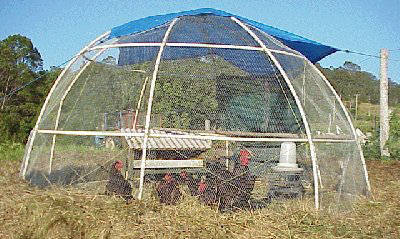
And if he likes he can live in a place where he raises his own chickens. Chickens are incredibly easy to care for. I got my inspiration for raising urban chickens from Katy Skinner over at The City Chicken. She has put together a great site that not only answers most of the questions urban citizens might have concerning raising chickens in the city but she’s also got a gallery of chicken tractor photography that’s bound to inspire you to raise your own. This by the way is a chicken tractor, but we’ll get to housing in a bit.

First it’s necessary to understand hens and roosters. Aren’t chickens loud most people ask? The answer is that the boy chickens (Roosters) are loud. They crow, especially early in the morning and are sure to annoy neighbors close by. I would not suggest raising roosters. Many municipalities don’t allow it anyway. Girl chickens (Hens) don’t make much noise. They do coo and occasional squawk when they get excited or are chased but on average they make much less noise than a dog. Some municipalities have adopted standardized zoning regulations that don’t allow livestock of any kind to be raised inside of the city limits. There are three approaches to dealing with this fact of location. The first is to lobby for a change in the law. The second is to attempt to acquire a personal variance. The third is to respectfully approach your neighbors with your intentions and if there are no objections quietly set up your chickens. A small flock of 3 or 4 hens will probably go unnoticed even in urban areas.


The next question most people ask is about how I get eggs if I don’t have any roosters. The answer is that chickens lay eggs regardless of whether or not there is a male around to fertilize the egg. The vast majority of the eggs you purchase in at the grocery store are unfertilized. If given some thought most people prefer the idea of eating an unfertilized egg.


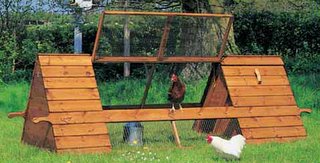
Housing for your flock can be accomplished by building a chicken tractor (or chicken ark in the UK) a mobile, bottomless cage system that works well for housing your chickens. This will contain and protect your chickens while providing them with a humane and even enjoyable home. Chickens need a minimum of about 2 square feet of covered area to protect them from the elements. If you want eggs it’s best to provide a nesting box for the chickens to lay eggs in. They will make their own nest in the absence of a box. They may even lay their eggs out in the open but I think they appreciate the box. Chickens need at least 8 square feet of outdoor area. Technically they can survive completely indoors. This is how they’re raised in commercial operations. But I think you will have happier chickens if they get a little running room. They love to scratch and strut. Even in an urban environment chickens do face threats in the form of predators. Neighborhood dogs, raptors and even raccoons. The chicken tractor helps to ensure their safety. And they come in all shapes and sizes.

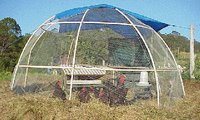
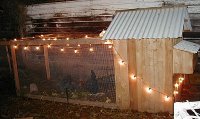
They even come in fashionable varieties.


Most people don’t realize chickens can fly. If you don’t provide them a home to sleep in at night they will often fly up into the safety of nearby trees. These trees may or may not be on your property. This could cause conflict with neighbors and is another reason to provide your chickens with a home. You can clip their wings to keep them grounded. This is accomplished by spreading one wing and cutting off the ends of the feathers. You don’t cut back very far so it doesn’t hurt the chicken. It just throws off the balance of flight and causes the chicken to crash if it tries to take to the air. Regardless of how permanent or how mobile you make you chicken housing structure it’s a good idea to provide the chickens their own abode.


You will need to provide your flock with a supply of water. The container will need to be cleaned periodically. A helpful hint is to tie the water container several inches above the ground. This will keep debris from flying into the water as the chickens scratch about. That means you’ll only have to scrub it when you change the water- once a week or so depending on the weather. I keep an old dish scrub brush next to the outdoor faucet for this purpose. You will also need to supply your chickens with food. Chickens will eat just about anything from your kitchen. They love table scraps and unlike dogs they prefer veggies. I feed them leftovers (they love spaghetti, think worms) and also any sort of grain or fruit I discard. Chickens are omnivores and will eat meat. I’ve watch them chase and eat crickets. They also love to scratch for grubs and bugs. They’re a great addition to the pest control division of my garden. I do refrain from feeding them leftover chicken. I bet they’d eat it but it just doesn’t seem right. I do mix their table scraps with feed I purchase from a farm supply store especially in the winter. I mix it myself to include chicken pellet feed, scratch grains and a small amount of crushed oyster shells. Sometimes I put it in a food container designed for chickens. Often though I just spread it on the ground in their outdoor area. They seem to enjoy scratching through their food.


All in all they work well as an excellent way to rapidly compost the organic material coming out of my kitchen. The manure the chickens generate is excellent fertilizer for the garden. Chicken droppings must be composted before they are used in the garden. If not they’ll burn the plants. I accomplish this by using a layer of leaves collected in the fall to line the interior of their structure’s outdoor area or chicken run. During the fall, winter and early spring I leave the chicken tractor in roughly the same spot. Every so often I rake up all the leaves, chicken poop and loose soil from the chicken run. I pile this material in a sunny spot and let it compost, replacing the layer of leaves in the chicken tractor. By time I’m ready to plant my garden I‘ve got excellent compost.


I do let the chickens roam loose in the backyard when I’m around, especially in the warmer months when there’s plenty of grass and insects for them to eat. During this time of year they mainly feed themselves during their “pasture time”. I do have a fence that encloses most but not all of my property. We do get the occasional animal that wanders into the area but the chickens are quick to run to their home at the first sign of danger and I seldom leave them to wander if I’m not close by. Rarely do I find the chickens venturing more than 100 feet from their home. As it gets dark I don’t even have to round them up. They make their way back to their tractor all on their own.

Chickens do need protection in the form of shade from hot summer days. The amount you provide will depend on your climate. Likewise you will need to provide a heat source in the winter if you live in a cold region of the globe. Chickens do fine down to the freezing point. At that temperature they can experience frost bite. My rule of thumb is to supply heat in the form of a light bulb to ensure the interior of their home never falls below 40 degrees Fahrenheit. The light seems to help promote winter season egg laying.


Chickens will begin laying eggs 4 and 8 months after hatching depending on the breed. During the first year of egg laying the chickens will be most prolific, laying almost one egg per day in prime circumstances. This does depend again on the breed. There are many different types of chickens. Do some investigating to determine which you would like to raise. There are even dwarf chickens or bantams that are smaller and therefore more appropriate for undersized backyards.


I must mention the Avian bird flu. It has not shown up in migratory birds here in North America. The virus spreads from wild fowl to domestic birds through interaction and then spreads to humans through direct contact. IT CAN BE EASILY AVOIDED by not allowing your birds to come into contact with wild, migratory birds. For most urban or suburban dwellers this is easy to do. I have never had a flock of wild geese land in my yard. The chicken tractor would ensure that the already unlikely contact between my birds and wild fowl doesn’t occur. The second layer of precaution is proper handling of the birds. Recently children in the country Turkey were infected with Avian flu after playing with severed chicken heads. This is not a good idea. In fact it’s smart not to handle your birds very often and to always wash your hands thoroughly after contact with them. The chances of getting sick because you raise chickens are minuscule. Most of what is covered in the mass media is fear mongering but you probably know that already.


I don’t cover the butchering of chickens to provide a meat source because I am a vegetarian and don’t have any experience in the matter. The resources provided at the end of this post will make available that information.


To end on a lighter note I’d like to briefly discuss brooding chicks. This is an exciting experience as you bring home your baby chicks and care for them until they’re ready to live outdoors in the home you provide. Spring is a good time of year to acquire your chicks as they are extra susceptible to cold until they grow fully formed feathers. You can inquire locally at farm supply stores. Some will sell chicks usually around Easter. If not they may know of local sources maybe even local farmers who will sell or trade for chicks. You can also buy them from hatcheries by mail order. The biggest problems will be the minimum purchase most companies require. Most backyard chicken owners don’t need 30 chickens! Persistence will award you with a reliable source. Many suppliers will be unable to tell you if you are purchasing hens or roosters. If this is the case you should plan on 50% of each. Make plans ahead of time on how you will humanely handle your roosters if you can not keep them. Often you may find people further out of town willing to adopt your roosters. Try Freecycle for giving them away as well. Before you get your little darlings home you’ll want to have their temporary home set up. You’ll need to get a container, the large Tupperware type works well. Use newspaper as a lining. This will allow you to clean up droppings easily. Some people have mentioned problems with wet newspaper sticking to the chicks but I haven’t had this problem. Next you’ll need a light bulb that you can adjust so it hangs lower or higher. A stronger bulb works better and have a spare on hand. You’ll need a container for food and a container for water. You can purchase metal containers for each purpose that screw on to regular mason jars. These work best at keeping the chicks and chick poop out of food and water. You can as always improvise. Special chick food can be purchased from your chick supplier, a feed store or online. While you’re buying get some chick grit. This will supply the chicks with the small stones they need to aid in digestion. Bring the chicks home as soon as possible if shipped by mail. Adjust the height of the bulb, their heat source. If it’s too low the chicks will get hot and move away from the bulb. If it’s too high the chicks will get cold and cheeep (complain) from underneath the bulb. You should start at 90 degree Fahrenheit and decrease the temperature by 5 degrees each week. The chicks will let you know (cheeep cheeep!) if you mess up. After about 6 weeks they’ll have most of their feather (depending on breed) and can be moved to an outdoor home depending on the weather and how weatherproof you’ve built their permanent home. A final note, be sure to check the chicks for poop build up on their underside. They can “paste up” and block waste removal. This can cause obvious problems.
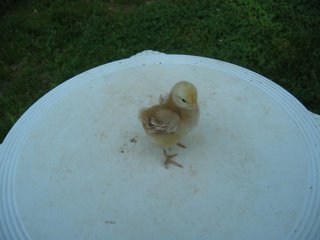
baby Ubie

All in all I think those willing to try raising backyard chickens will be please with the experience. What a wonderful way to provide food for yourself, fertilizer for you garden, pest control for your yard and to enjoy the company of intelligent and amusing creatures.

Best of luck.

The City Chicken
Chicken Encyclopdeia
Mad City Chickens
The Urban Chicken
Organic Living The Urban Chicken Part Three
Backyard Chickens
McMurray Hatchery
Brown Egg Blue Egg List of Hatcheries
Show Your Pride Urban Chicken Farmers!

Thursday, October 22, 2009

farming where you are

On this typical, suburban street there's a space directly contiguous to the curb that creates distance between the whizzing cars and the relative safety of the sidewalk. It's a strip of grass seven feet wide.

It is maintained by a homeowner who uses gasoline made from petroleum to mow it short, and nitrogen fertilizer made using natural gas to keep it growing tall. Weeds are kept under control by using pesticides that wash into the gutters and down the storm water system into creeks where they pollute the water supply of both humans and all other creatures down stream. The lots on this street are 100 feet wide creating 700 square foot green strips in front of each home. John Jevons, states that it's possible for even a modest farmer to raise 200 pounds of potatoes per year in a 100 square foot area. That's a possible 1400 pounds of potatoes per house. At 330 calories per pound that's a total of 462,000 calories or 45% of the calories necessary to sustain the average teenage male for entire year. If he really likes potatoes.

It appears possible if you live on this street to reduce the amount of gasoline you use, reduce the amount of air pollution your dirty lawnmower belches out, reduce the about of natural gas used to make commercial fertilizers and reduce the amount of chemical pollutants in our water system all while growing almost half the calories your son will need for a year in an area that is not consider arable. I'm not really suggesting that this specific part of your plot is the best place to start actively cultivating land currently considered unfit for raising food. Or that man can live on potatoes alone. Maybe just the idea of starting to grow food in your front yard flower bed is enough (and you're going to want to add in some beans and tomatoes) but it does begin to suggest that our current definition of where we can grow food is in need of an update.

Typically we describe land capable of supporting food production as arable. But what is arable land? Of the 57 million square miles of dry land on Earth, approximately 12 million square miles, or 21%, are considered arable by traditional standards. The inverse term, Unarable, applies to the rest of the surface of the planet; hose areas that aren’t typically thought of as able to support food production. Typically these areas are too cold or too hot; too wet or too dry; too shady or too rocky or too steep for traditional agriculture. There it is again, “traditional agriculture.” What does that mean? Typically agriculture is defined as the systematic production of “food, feed and fiber” using domesticated plants and animals. Humans have been doing it for 10,000 years with varying degrees of success. Recently though the cyclic processes that governed this way of harvesting from nature have been replaced by a linear processes that substitute hydrocarbons for human & animal labor as well as nutrient recycling. We human beings have been experiencing a temporary vacation from the cycles that sustained us for thousands of years. And as a result we’ve paid little or no attention to the knowledge base necessary to do so. We’ve become complacent because of our cheap, abundant energy; paying no real attention to the idea that careful stewardship of the land is the only real way to ensure long term thrival of our species.

But now I’ve gone off on a tangent. I was talking about arable land and “traditional agriculture.” Far from being a non-traditionalist, I think the best place to start when considering our food future is to look back at history and learn the lessons it has to teach us. After all, the use of hydrocarbons to replace cycles with linear processes is a rather recent development. So how did humans get by before the age of cheap oil and natural gas in terms of raising plants and animals to eat? They grew food where they lived.

But how can an updated version of our attempts to farm change the way we think about where farming is possible, probable or even a good idea? The truth is farming is possible in many places not typically considered arable. The above example of an underutilized strip of grass next to a road way is but one example of space that can provide calories. Rooftops, patios, porches and even in our cars, people can used any and all available space to farm. It seems to me that any attempt to promote farming or the growing of one’s own food must examine an attempt to use existing resources for doing so. An old tire and some fallen leaves is enough to start growing potatoes on your patio. Ingenious ideas about using the trappings of modern life to contain soil and water in a sunny spot can yield food for you and your family. Arable land need not be only flat, rich soil in sunny spots located in temperate climates. Human ingenuity should be mined in an effort to expand where and how we grow our food.

Truck Farming - think it isn’t possible to grow food in your truck bed? ;-)

Wednesday, August 05, 2009

getting somewhere with design

"Planning is an unnatural process; it is much more fun to do something. And the nicest thing about not planning is that failure comes as a complete surprise, rather than being proceeded by a period of worry and depression.” John Harvey-Jones

While it’s certain possible to over intellectualize the process of design, it’s also just as likely that doing without think can lead to failure. Brainstorming about garden design is easy enough for most people. Many of us can conjure up images of gardens or at least thumb through online images of chicken tractors and victory gardens and dream about doing that in our own yards. The difficult task seems to be translating these visions into successful projects- taking information and putting it to work; the result of which will be the experience you will need to be successful in the long run.

As a place to start we’re going to discuss the process of design needed to organize the gardening/farming efforts of entire property. The first step is the brainstorming mentioned above. It helps to get an idea of what you want out of your outdoor efforts. To that end we used a questionnaire to organize your Needs & Wants. The second step is to take a Site Inventory of your property. The next step is to begin deciding what might go where. Of course this is the part that requires an understanding of how garden and growing food works.

At this point let me put you at ease by suggesting that you are definitely going to make some mistakes. Don’t let a fear of failure paralyze you at this point. Maybe you don’t feel like you have enough knowledge to know where the chicken coop should go or if a particular spot will be sunny enough for your vegetable garden. The best you can do is to read and ask questions of knowledge people regarding these issues. At some point though you’re going to have to make a decision and get at it. One thing of which I am certain is that if you do not move forward with your gardening project, you will never eat food from it.

So now is the time, right or wrong, to begin making decisions about what is going where. Bubble in your decisions on a copy of your Base Plan, the plan you came up with as an inventory your property. All your Needs & Wants should be represented graphically on this Bubble Plan. It is going to change as you share it with people and they offer constructive criticism. It’s going to change as your Needs & Wants change. It’s going o change as your budget dictates and for a whole host of other reasons but at least for now you need to have a starting point from which to begin- a point from which to begin the actual change. This Bubble Plan will offer you something else as well. It will help you organize and further design the individual areas or sites of your property.

Say for instance you have designated your front yard as the primary place for your vegetable garden. At this point you have a large bubble encircling the front yard with the words, “Veggies Go Here,” written across that bubble. Once you’ve finished bubbling your entire property you can revisit the front yard bubble and begin to refine its design. Ask yourself, What does that garden space actually look like? Where are the paths? How wide are they? Where does the tall stuff like corn go so as not to shade out the short stuff? Do you need water beyond what rains? If so where will it come from? Will the hose reach? How many tomatoes will you grow? Peppers? Kohlrabi? Do you need a fence? Once you’ve established an over all plan for your property you can drill down into the design of these specific sites without feeling overwhelmed. This strategy breaks the design process into a Master Plan for the overall property and Site Plans for individual sites throughout your property. Your Master Plan is just a refined Bubble Plan. Here, let’s draw it. If you haven’t figured this out I’m more of a visual person.


It’s important to remember that Design is not a noun, not in this context at least. Design is a verb and refers to an ongoing process. A Plan (Bubble or Site or Master) is the noun, the product of the design process. The arrows that loop back to the beginning of this diagram represent the fact that both the needs & wants and the site conditions relevant to a particular garden or farm project will constantly change. It’s alright to stop along the way and consider a Master Plan or a particular Site Plan to be “finished” so that you don’t go crazy with constantly redesigning your property. But recognize that over time your Plans will change while the process of design will continue.

Tuesday, February 24, 2009

getting somewhere with design

"Planning is an unnatural process; it is much more fun to do something. And the nicest thing about not planning is that failure comes as a complete surprise, rather than being proceeded by a period of worry and depression.” John Harvey-Jones

While it’s certain possible to over intellectualize the process of design, it’s also just as likely that doing without thinking can lead to failure. Brainstorming about garden design is easy enough for most people. Many of us can conjure up images of gardens or at least thumb through online images of chicken tractors and victory gardens and dream about doing that in our own yards. The difficult task seems to be translating these visions into successful projects- taking information and putting it to work; the result of which will be the experience you will need to be successful in the long run.

As a place to start we’re going to discuss the process of design needed to organize the gardening/farming efforts of entire property. The first step is the brainstorming mentioned above. It helps to get an idea of what you want out of your outdoor efforts. To that end we used a questionnaire to organize your Needs & Wants. The second step is to take a Site Inventory of your property. The next step is to begin deciding what might go where. Of course this is the part that requires an understanding of how garden and growing food works.

At this point let me put you at ease by suggesting that you are definitely going to make some mistakes. Don’t let a fear of failure paralyze you at this point. Maybe you don’t feel like you have enough knowledge to know where the chicken coop should go or if a particular spot will be sunny enough for your vegetable garden. The best you can do is to read and ask questions of knowledgeable people regarding these issues. At some point though you’re going to have to make a decision and get at it. One thing of which I am certain is that if you do not move forward with your gardening project, you will never eat food from it.

So now is the time, right or wrong, to begin making decisions about what is going where. Bubble in your decisions on a copy of your Base Plan, the plan you came up with as an inventory of your property. All your Needs & Wants should be represented graphically on this Bubble Plan. It is going to change as you share it with people and they offer constructive criticism. It’s going to change as your Needs & Wants change. It’s going o change as your budget dictates and for a whole host of other reasons but at least for now you need to have a starting point from which to begin- a point from which to begin the actual change. This Bubble Plan will offer you something else as well. It will help you organize and further design the individual areas or sites of your property.

Say for instance you have designated your front yard as the primary place for your vegetable garden. At this point you have a large bubble encircling the front yard with the words, “Veggies Go Here,” written across that bubble. Once you’ve finished bubbling your entire property you can revisit the front yard bubble and begin to refine its design. Ask yourself, What does that garden space actually look like? Where are the paths? How wide are they? Where does the tall stuff like corn go so as not to shade out the short stuff? Do you need water beyond what rains? If so where will it come from? Will the hose reach? How many tomatoes will you grow? Peppers? Kohlrabi? Do you need a fence? Once you’ve established an over all plan for your property you can drill down into the design of these specific sites without feeling overwhelmed. This strategy breaks the design process into a Master Plan for the overall property and Site Plans for individual sites throughout your property. Your Master Plan is just a refined Bubble Plan. Here, let’s draw it. If you haven’t figured this out I’m more of a visual person.


It’s important to remember that Design is not a noun, not in this context at least. Design is a verb and refers to an ongoing process. A Plan (Bubble or Site or Master) is the noun, the product of the design process. The arrows that loop back to the beginning of this diagram represent the fact that both the needs & wants and the site conditions relevant to a particular garden or farm project will constantly change. It’s alright to stop along the way and consider a Master Plan or a particular Site Plan to be “finished” so that you don’t go crazy with constantly redesigning your property. But recognize that over time your Plans will change while the process of design will continue.

Saturday, February 21, 2009

neighborhood farming


This week we're going to examine a strategy aimed at expanding the area available for growing food in a particular neighborhood. It happens to be the neighborhood where I live. The map above shows my town. My neighbor is marked by an asterisk. I don't have an abundance of sun in my yard so a few years ago I went looking to see if other people had more sun and were interested in growing food. Here's my neighborhood.


Here's my property in red.


I started by going across the street and asking my elderly neighbor if I could garden in her backyard. Then I recruited Eric who grows food in his backyard and is transitioning into a career as a farmer. Next I was able to start a garden in the backyard of the rental house next door to my property. It was part of a bartering arrangement whereby the landlord agreed to take down a few dying trees and in return I now grow food on her property. All of these active gardens are shown in dark green.


Several other people have expressed interest in helping to grow neighborhood food and/or have offered a sunny spot for a garden. These properties are shown in light green.


The biggest single area under cultivation is the vacant lot down the street. I've had some sort of a garden on that property for four years but this year it has been greatly expanded. It's shown in yellow.


Next we have the people interested in buying food. In years past I have given extra produce to these people, sometimes just leaving it on the backdoor step of neighbors I've never met as a way to start up a conversation. This year some of these people might formalize the relationship by becoming paying customers. These folks are shown in blue.


Other people in the neighborhood have offered compostable material, especially fallen leaves and grass clippings. Most of them have also expressed interest in helping to grow food and/or buying it. In fact most of the property owners represented on this map have overlapping interests in this neighborhood farming effort. These people are shown in orange.


Lastly there's the elementary school right around the corner. They have a great courtyard perfect for growing food and quite a bit of land out back that could be used to grow a great deal of vegetables. Frankly I haven't had the time to seriously address this opportunity... yet.


All of this needs work. Yes we have 462 gallons of rainwater storage capacity at the site across the street from my house and 12 raised beds and a great old apple tree. At the vacant lot however we don't have enough mulch stored for this coming growing season and we'll have to use municipal water unless I can find enough people willing to put in a decent rainwater harvesting system. A formal work schedule has yet to be developed. And the school, a huge opportunity, has not been included as of now. In other words this is, like any collective effort, an ongoing project that I imagine will continue to evolve. But it is the beginnings of model of expanding food production efforts beyond the boundaries of one particular property and out into the surrounding community. I can't wait to see where we go from here.